Best 10 Ways to Improve Indoor Lighting Quality?

Time:2026-05-07 Author:Ethan
0%

Indoor lighting is essential for creating a comfortable and productive environment. According to a report by the International Energy Agency, nearly 30% of energy consumption in buildings is related to lighting. Many individuals overlook the impact of lighting on well-being and productivity. Studies show that improved lighting can enhance mood, reduce eye strain, and increase work efficiency.

Understanding "How To Improve Indoor Lighting Quality" involves a multi-faceted approach. This includes using the right type of bulbs, optimizing light placement, and taking advantage of natural light. For instance, daylight exposure can boost productivity by about 20%. However, many homes and offices still rely heavily on outdated lighting solutions.

Realizing the potential of quality indoor lighting requires commitment. While there are many methods available, not all may suit your specific needs. Experimenting with different lighting strategies will give insights into what works best. This ongoing process can transform spaces significantly, promoting a healthier atmosphere and enhancing daily experiences.
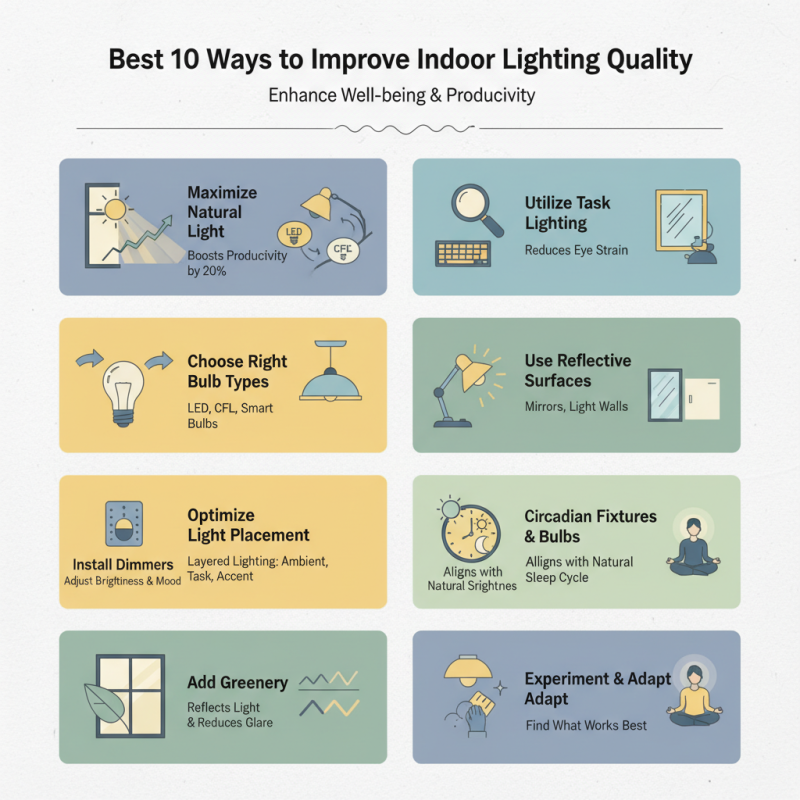
Best 10 Ways to Improve Indoor Lighting Quality?

Types of Indoor Lighting and Their Impact on Quality

Indoor lighting comes in various types, each impacting the quality of light and overall ambiance differently. Ambient lighting offers a base layer of illumination. It's often soft and diffused, creating a comfortable atmosphere. However, it may not always provide enough brightness for specific tasks. Task lighting, on the other hand, is focused and direct. It's essential for activities like reading or cooking, ensuring clarity and preventing eye strain.

When choosing lighting, consider the color temperature. Warm tones create a cozy environment, while cool tones are energizing. Balance is key. Avoid overusing one type of light to prevent harsh contrasts. Layering your lighting can improve functionality and aesthetics.

**Tips:** Use dimmers to easily adjust brightness. This allows flexibility based on the activity or mood. Incorporate smart lighting solutions for convenience. Experiment with various placements to see what works best. Think about natural light too; mirrors can reflect sunlight and enhance indoor brightness. Monitor how different lights affect your mood and productivity. This can lead to better living and working conditions.

Selecting the Right Light Bulbs for Optimal Brightness and Color

Choosing the right light bulbs can dramatically impact your indoor lighting quality. A report from the U.S. Department of Energy indicates that lighting accounts for nearly 15% of the average home’s electricity use. This highlights the importance of selecting efficient, high-quality bulbs. LED bulbs are now favored for their energy efficiency. They can produce the same brightness as traditional bulbs while using up to 80% less energy.

Color temperature is also crucial for creating the desired atmosphere. Warm white bulbs (around 2700K) are ideal for cozy living areas, while cooler temperatures (over 4000K) are suitable for workspaces. A study from the Lighting Research Center emphasizes that the right color temperature can increase productivity and mood. Many people overlook this and stick to a single type of bulb, missing the opportunity for better ambiance.

Another aspect to consider is the color rendering index (CRI). Bulbs with a CRI of 90 or above are preferable. They accurately represent colors, enhancing the overall experience in a room. However, many consumers do not check this metric when purchasing bulbs, leading to dissatisfaction over time. Understanding these factors helps in making informed choices, yet many still grapple with the overwhelming options available on the market.

Best 10 Ways to Improve Indoor Lighting Quality

Utilizing Natural Light to Enhance Indoor Spaces

Natural light can transform indoor spaces. It enhances mood and well-being. When utilized properly, it reduces the need for artificial lighting. Maximizing windows is a great start.

Tip: Keep windows clean to ensure maximum light penetration. This simple step makes a big difference. Consider using sheer curtains to diffuse light gently. It allows brightness while maintaining privacy.

Experiment with room layouts. Position furniture to face windows. This encourages light to flow and creates a welcoming atmosphere. Remember, it's essential to balance natural and artificial light. Sometimes, a space might still feel dim.

Tip: Use mirrors strategically. Place them across from windows to reflect light further into the room. This trick can visually expand space and brighten dark corners.

Not every home is perfect for natural light. Some rooms may need more exposure. If your space lacks windows, consider light tubes or skylights. They can bring in daylight from the roof, making a significant impact.

Incorporating Adjustable Lighting Solutions for Flexibility

Adjustable lighting solutions offer an excellent way to enhance indoor environments. Research indicates that proper lighting can improve productivity by up to 15%. This flexibility allows individuals to customize their spaces for various tasks. For instance, brighter lights are ideal for focused work, while softer tones can create a relaxing atmosphere.

Employing dimmers is a popular approach to adjustable lighting. They provide the ability to change brightness levels with ease. Studies show that dimmed lights during evening hours contribute to better sleep quality. Many users, however, overlook the potential benefits of this simple technology. Lighting intensity affects mood and energy levels significantly. It’s crucial to assess how different settings influence your overall well-being.

Natural light integration is another effective strategy. Research points out that exposure to natural light can reduce eye strain and improve concentration. Installing adjustable window treatments allows more control over light entry. This can result in a more pleasant and productive environment. Balancing artificial and natural light may sound straightforward, yet many indoor spaces still fall short. Recognizing this gap presents an opportunity for improvement.

Best 10 Ways to Improve Indoor Lighting Quality

Method Description Benefits Flexibility Feature
Use Dimmer Switches Adjust the brightness of your lights based on the time of day or activity. Enhances mood and improves visual comfort. Allows for customizable lighting scenes.
Install Smart Bulbs Use bulbs that can be controlled via smartphone apps. Energy-efficient and remote access to lighting. Enable scheduling and color temperature adjustments.
Optimize Natural Light Use window treatments that maximize daylight. Reduces energy costs and improves indoor air quality. Adjust window coverings for varying light levels.
Layer Your Lighting Combine ambient, task, and accent lighting. Creates depth and dimension in the room. Easily switch between different light sources.
Use Color Temperature Control Choose bulbs that offer adjustable color temperatures. Affects mood and productivity based on activity. Switch between warm and cool light as needed.
Utilize Floor and Table Lamps Add portable lamps for targeted lighting. Flexibility in moving lights to desired spots. Easily relocate for different functions or events.
Incorporate LED Strip Lighting Place LED strips under cabinets or along ceilings. Creates an inviting atmosphere and adds design interest. Easily cut to length and reposition as desired.
Use Task Lighting Install focused lights in work areas like desks and kitchens. Reduces eye strain and increases productivity. Can be adjusted for specific tasks or activities.
Implement Motion Sensors Automate lighting to turn on/off based on movement. Increases energy efficiency and convenience. Can be configured for different activity levels.

Implementing Smart Lighting Systems for Energy Efficiency

Implementing smart lighting systems can significantly enhance indoor lighting quality while promoting energy efficiency. According to a report by the U.S. Department of Energy, smart lighting technologies can reduce energy consumption by about 30% on average. This is achieved through automated adjustments, such as dimming or turning off lights in unoccupied rooms. The integration of motion sensors plays a pivotal role here. These sensors not only save energy but also extend the lifespan of light bulbs, reducing maintenance costs.


Smart lighting systems also provide customizable ambiance, which improves mood and productivity. A study from the American Psychological Association indicates that lighting quality directly affects cognitive function and emotional well-being. Users can control intensity and color temperature through smart devices. However, some people may experience difficulty in adapting to automated systems. The reliance on technology can sometimes feel overwhelming, making manual adjustments necessary.


Security is another concern. While smart lighting enhances safety by deterring intruders with programmed lighting patterns, it may also introduce vulnerabilities. A report by Cybersecurity and Infrastructure Security Agency highlighted potential risks involved in IoT devices. Users must remain aware of these issues while enjoying the benefits of advanced lighting solutions. The journey towards improved indoor lighting quality involves careful consideration of both innovative technology and its drawbacks.

FAQS

: How can natural light improve indoor spaces?

: Natural light can enhance mood and well-being. It also reduces reliance on artificial lighting.

What is a simple tip for maximizing natural light?

Keep windows clean to allow maximum light penetration. This simple act truly makes a difference.

What type of window treatments work best for natural light?

Sheer curtains diffuse light softly while maintaining privacy. They enhance brightness without harsh glare.

How should I arrange furniture to improve natural light flow?

Position furniture to face windows. This encourages light to move freely and creates a welcoming vibe.

What if my room lacks natural light?

You might consider installing light tubes or skylights to bring in daylight from the roof.

How can adjustable lighting improve my indoor environment?

Adjustable lighting allows customization for various tasks. Brighter settings are great for work, softer tones for relaxation.

Why are dimmers important in lighting design?

Dimmers change brightness levels easily. They can enhance mood and improve sleep quality when used at night.

What benefit does natural light provide for productivity?

Proper exposure to natural light can improve concentration and reduce eye strain, enhancing overall productivity.

How can I balance artificial and natural light in my space?

Utilize adjustable window treatments for better control over light entry. It’s vital for creating a pleasant atmosphere.

What should I reflect on regarding indoor lighting?

Many spaces fall short in balancing light. Recognizing where to improve can lead to a better living experience.

Conclusion

Improving indoor lighting quality can significantly enhance the ambiance and functionality of a space. Understanding the various types of indoor lighting, such as ambient, task, and accent lighting, is crucial as each has a unique impact on the overall quality. Selecting the right light bulbs that offer optimal brightness and accurate color rendering is essential for creating a pleasant environment. Furthermore, incorporating natural light through windows and reflective surfaces can further enhance indoor settings.

To maximize flexibility, adjustable lighting solutions are recommended, allowing users to tailor illumination according to specific needs and occasions. Additionally, implementing smart lighting systems provides energy efficiency and convenience, enabling users to control their lighting remotely. In summary, knowing how to improve indoor lighting quality involves a combination of selecting appropriate light types, bulbs, and technology, ultimately creating a more inviting and efficient atmosphere.

Ethan

Ethan

Ethan is a seasoned marketing professional with a deep expertise in our company's innovative product line. With a passion for sharing knowledge and insights, he takes the lead in regularly updating our corporate blog, where he explores industry trends, product features, and effective marketing......